


2026
How Do Small Businesses Perform Cross-Border Deliveries?
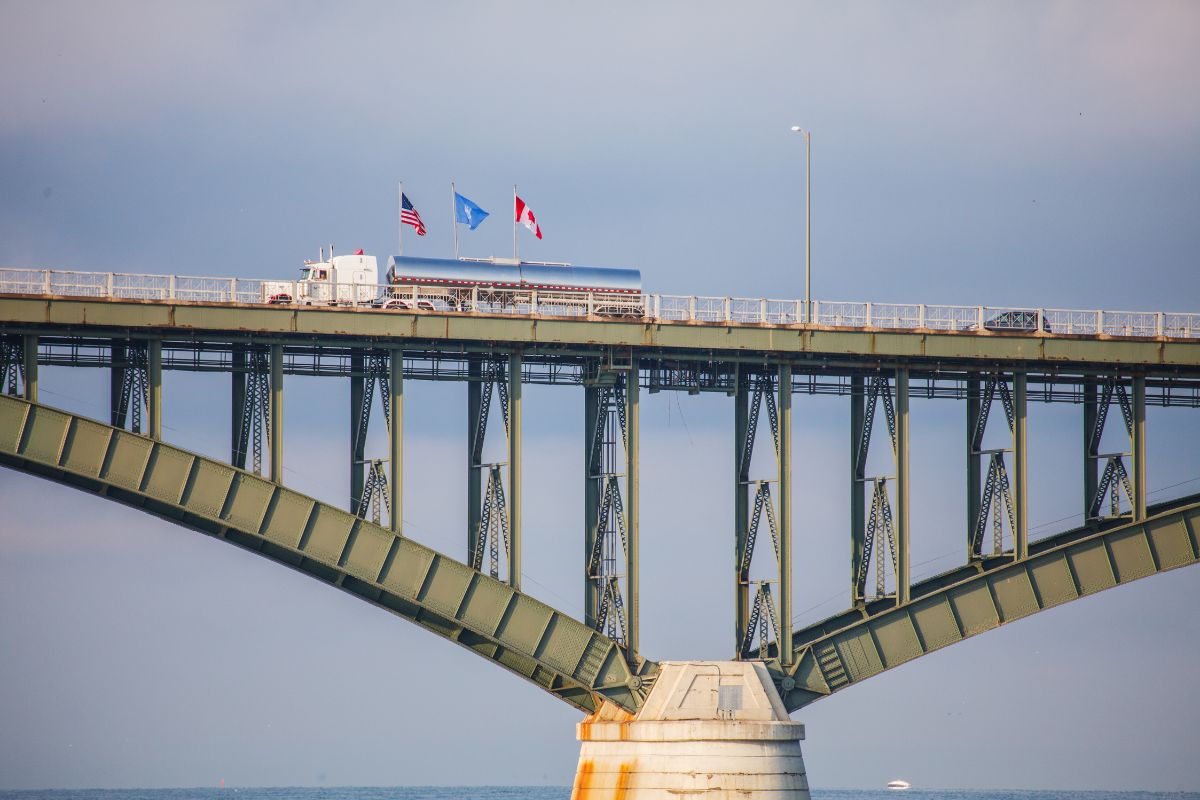
Expanding your small business into the United States market is a massive growth opportunity, but it comes with a unique set of logistical challenges. Shipping products from Canada to the US is not just domestic shipping with a longer transit time. It involves navigating customs regulations, calculating duties, and ensuring compliance at the border.
For growing brands, establishing a reliable cross-border strategy is the difference between a profitable expansion and a logistical nightmare. Understanding the documentation, duty thresholds, and carrier networks required for international shipping allows you to reach millions of new customers without sacrificing your profit margins or delivery speeds.
Prepare Essential Customs Documentation
Every shipment that crosses the Canada-US border requires specific paperwork to clear customs without delays. Missing or inaccurate documentation is the leading cause of freight being held at the border. The most critical document you must prepare is the commercial invoice.
A commercial invoice acts as a detailed declaration of your shipment for customs officials. It must include the exact value of the goods, the country of origin, the buyer and seller information, and a highly specific description of the products. Vague descriptions like "apparel" or "gift items" will almost certainly trigger a customs inspection.
To ensure your shipments clear customs smoothly, your documentation must include:
- Accurate Harmonized System (HS) codes for every single product variation.
- A detailed commercial invoice outlining the true retail value of the goods.
- A CUSMA/USMCA Certificate of Origin if you are claiming preferential duty rates.
- Any specific permits required by agencies like the FDA or CFIA for regulated items.
Treating your customs data as a strictly controlled process prevents costly holds and ensures your products keep moving toward their final destination.
Understand De Minimis Thresholds And Section 321
Duties and taxes can quickly erode your profit margins if you do not understand how they are applied. Fortunately for Canadian businesses, the United States has a relatively high de minimis threshold. This threshold is the value below which goods can enter the country without being subject to formal customs entry or duty payments.
Currently, the US de minimis threshold is set at $800 USD. This means that if you are shipping direct-to-consumer e-commerce orders valued under $800, they can often enter the US duty-free. This provides a massive competitive advantage for small businesses shipping smaller, individual orders rather than large wholesale pallets.
Many businesses leverage Section 321, a US customs provision that allows these low-value shipments to cross the border without duties. However, utilizing Section 321 requires accurate valuation and proper manifest filing. It is not a loophole, but rather a formal process that must be managed correctly to remain compliant with US Customs and Border Protection.
Choose Between DDP And DDU Delivery Models
When shipping internationally, you must decide who is responsible for paying any applicable duties and taxes: you or your customer. This decision is defined by the shipping terms Delivered Duty Paid (DDP) and Delivered Duty Unpaid (DDU), also known as Delivered at Place (DAP).
With DDP shipping, your business calculates and pays all duties and taxes upfront during the checkout process. The customer receives their package with no surprise fees at the door. This model provides a seamless customer experience, drastically reduces cart abandonment, and prevents packages from being refused and returned.
Conversely, DDU shipping means the customer is responsible for paying the duties when the package arrives. While this is easier for the seller upfront, it often leads to frustrated customers who were unaware of the extra costs. For most small businesses focused on e-commerce, utilizing a cross-border shipping strategy that incorporates DDP is highly recommended to protect your brand reputation.
Utilize Bonded Storage For Duty Deferral
If you are importing goods from overseas into Canada before shipping them to the US, you might be paying duties twice. Small businesses can avoid this double taxation by utilizing specialized warehousing solutions designed for international trade.
A bonded warehouse allows you to store imported goods in Canada without immediately paying the Canadian duties and taxes. The duties are deferred until the goods officially enter the Canadian market. If the goods are eventually shipped to a customer in the United States, you bypass the Canadian duties entirely.
By strategically storing your inventory in a bonded facility, you improve your cash flow and reduce your overall landed costs. This is an incredibly effective strategy for businesses that use Toronto as a central distribution hub for both North American markets.
Optimize Your Carrier Network And Linehaul Strategy
Relying on a single small parcel carrier to handle the entire journey from your Canadian facility to a US customer is often the most expensive way to ship. Small businesses that optimize their cross-border deliveries use a strategy known as zone skipping or linehaul injection.
Instead of handing individual packages to a carrier in Canada, businesses consolidate hundreds of US-bound orders onto a single freight truck. This truck performs a linehaul run across the border, clearing customs as a single consolidated shipment. Once inside the US, the truck drops the packages at a local postal hub (like USPS) for the final mile of delivery.
To implement an efficient transportation strategy, businesses should:
- Consolidate daily e-commerce orders into larger freight shipments for border crossing.
- Partner with a logistics provider that handles the customs clearance process during transit.
- Inject packages directly into the US domestic postal network to secure local shipping rates.
- Ensure full end-to-end tracking visibility is maintained across different carrier handoffs.
This transportation method drastically reduces per-package shipping costs and often results in faster transit times compared to standard international parcel services.
Partner With A Specialized 3PL Provider
Managing HS codes, commercial invoices, and carrier routing internally is manageable when you are shipping a few orders a week. However, as your US order volume grows, the administrative burden of cross-border shipping will eventually stall your growth. This is when partnering with a third-party logistics provider becomes essential.
A specialized 3PL warehousing partner handles the entire cross-border workflow for you. They have the technology to automate customs documentation, the volume to secure discounted freight rates, and the expertise to navigate complex border regulations.
By outsourcing your fulfillment to a provider located near major transit hubs, you gain access to enterprise-level logistics without the massive capital investment. The right partner will manage the physical picking and packing, coordinate the border crossing, and ensure your US customers receive their orders just as quickly as your Canadian ones.
Scale Your US Expansion With Confidence
Successfully performing cross-border deliveries requires small businesses to move beyond basic shipping practices and embrace strategic logistics.
By mastering customs documentation, leveraging duty-free thresholds like Section 321, and utilizing DDP shipping models, you can provide a seamless experience for your American customers. Implementing advanced tactics such as bonded storage and linehaul injection will further reduce your costs and accelerate transit times.
As your volume scales, partnering with an experienced Toronto logistics provider ensures your cross-border operations remain compliant, efficient, and capable of supporting your long-term growth.
As market leaders in e-commerce order fulfillment, co-packing, transportation, and 3PL warehousing services within Toronto, we leverage our specialized expertise in the distribution industry. Our clientele spans across a multitude of industries, boasting some of the globe's most renowned companies.