


2026
How Toronto's Logistics Sector Quietly Powers Everyday Life Across the GTA
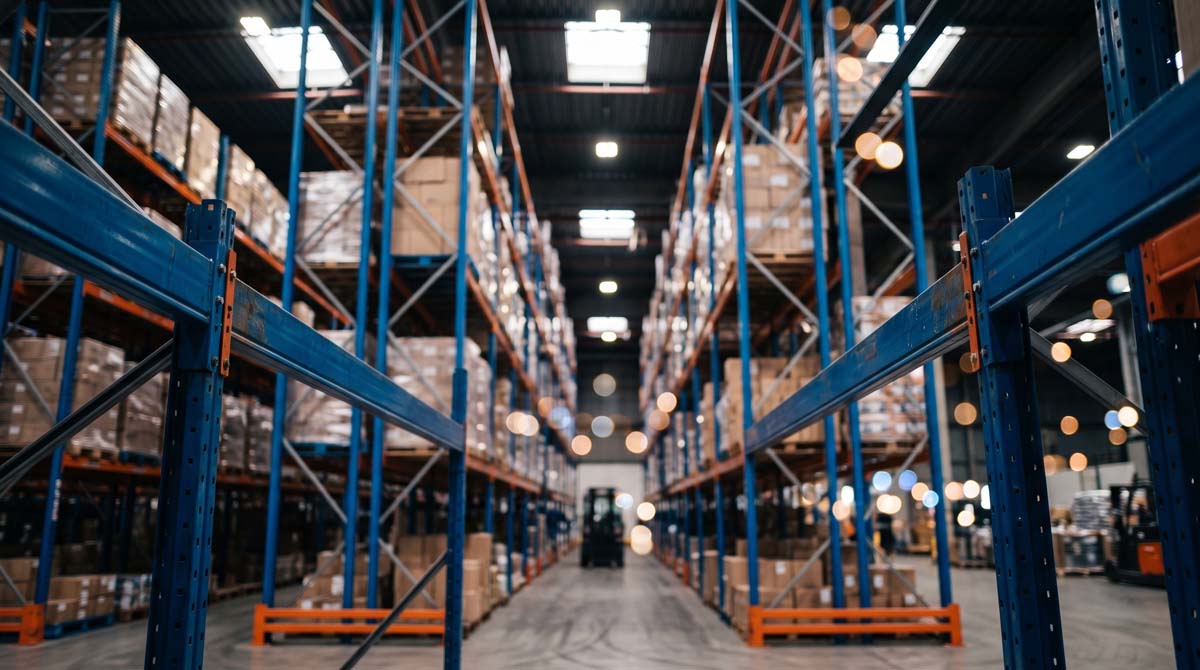
There is a stretch of Mississauga and Brampton that most Torontonians drive past without registering. Low buildings, wide yards, rows of trailer doors. It is not much to look at, and almost everything in your home passed through it.
The GTA runs one of the densest concentrations of warehousing and distribution in North America, and it is close to invisible by design.
The scale is genuinely unusual
Industrial space across the Greater Toronto Area is among the most tightly held on the continent, with availability sitting at levels that would be considered a crisis in most markets. The reason is straightforward: a third of the country lives within a few hours of here, and every company selling to them needs somewhere to put their inventory.
Peel Region in particular, covering Mississauga, Brampton and Caledon, functions as the distribution engine for the region and much of eastern Canada. Proximity to Pearson, to the 400-series highways, and to the American border did the rest.
What a day looks like
The rhythm starts before most of the city is awake. Overnight linehaul trucks arrive from Montreal, Chicago and points west and are unloaded in the small hours. Containers that came through the Port of Montreal or Vancouver get destuffed. By early morning, inbound freight is being received and put away while outbound orders are already being picked.
Through the middle of the day, retail loads are built to appointment schedules that receivers set weeks ahead. In the afternoon, parcel volume peaks as the day’s consumer orders are packed toward a carrier cutoff. Overnight, the whole thing resets.
Facilities running 24 hours a day are doing all of it continuously, which is why a package ordered at nine in the evening can still ship the next morning.
The work is more varied than the stereotype
The image of warehouse work is a person moving boxes. The reality covers a considerably wider range of roles.
Forklift and reach truck operators working to certification standards. Inventory analysts reconciling counts and investigating variances. Quality compliance staff maintaining food safety certification and running mock recalls. Customs specialists handling bonded and cross-border documentation. Dispatchers routing loads around weather and traffic. Maintenance technicians keeping equipment running. Account managers who know a customer’s product line in detail.
Collectively, logistics and transportation employ a very large number of people across the GTA, and the sector has been one of the more reliable sources of stable employment in the region through several economic cycles.
Regulated goods carry a layer most people never see
Some categories cannot be stored in an ordinary building. Food requires certified facilities with documented sanitation, temperature control and lot-level traceability. Natural health products carry Health Canada requirements. Beverage alcohol sits under excise rules and provincial distribution frameworks. Imported goods awaiting clearance need bonded status.
The paperwork behind food-grade warehousing and similar categories exists so that when something does go wrong, the affected product can be identified and pulled quickly rather than an entire category being withdrawn. It is invisible until the day it matters enormously.
What happens when it stops
The sector becomes visible during disruptions. Anyone who remembers empty shelves during the early pandemic, or watched freight stall during the 2021 flooding that severed BC’s highways, has seen what a few days of interruption looks like.
What prevents that most of the time is buffer inventory held regionally, and the transportation capacity to move it once roads reopen. Product sitting in a Brampton warehouse is product that keeps moving when something upstream fails. It costs money to hold, which is exactly why it tends to be the first thing cut and the first thing missed.
Why it matters locally
For businesses in the GTA, the concentration is an advantage worth using. Being close to this much distribution infrastructure means shorter supply lines, more competitive freight, and the ability to reach a third of the country overnight.
18 Wheels has been part of this since 1989, and our Toronto operation runs 350,000 square feet across Mississauga and Brampton. You can read more about our history and our team, or reach us at 416-316-6103.