


2026
Brampton, Mississauga, or Toronto: Choosing the Right GTA Warehouse Location
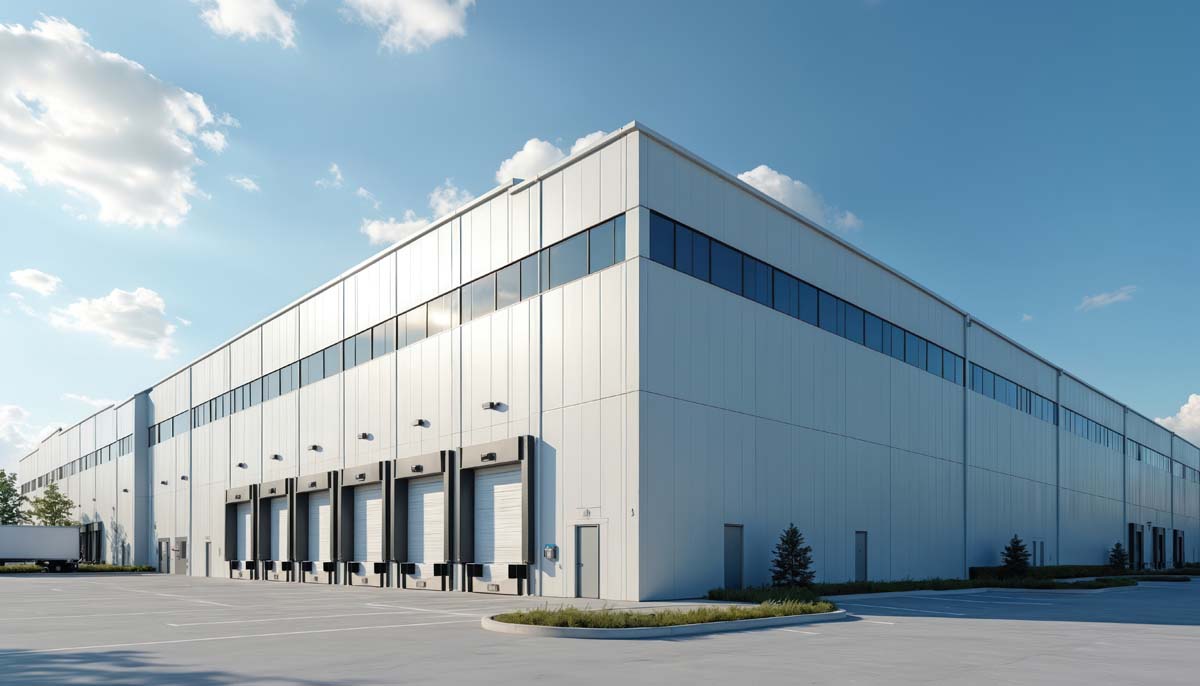
The Greater Toronto Area contains the largest concentration of industrial space in Canada, and to an outsider most of it looks interchangeable. Warehouses along the 401, warehouses along the 407, warehouses clustered around the airport. Concrete tilt-up buildings with dock doors and a truck court.
They are not interchangeable, and the difference shows up in your freight bill every month for the length of the lease.
Location inside the GTA determines your drayage cost from the port and the border, your parcel zone rates, your labour pool, your access to trucks during tight capacity, and how long a driver sits in traffic before doing any productive work. Those variables move in different directions depending on where you sit, which is why the right answer depends entirely on what your business actually does.
Mississauga Wins on Access, and Charges for It
Mississauga is the default answer for a reason, and Pearson is most of it.
Air freight moves through the airport, so anything time-sensitive or high-value benefits from being minutes away rather than an hour. The 401, 403, 410, 407, and QEW all converge in or near the city, which means you can reach almost anywhere in the GTA and get onto the corridor toward Windsor or Montreal without crossing the region first. Carriers like it, and carrier preference is worth real money when capacity tightens in the fourth quarter.
The southern part of Mississauga, along the Royal Windsor and Lakeshore corridors, adds proximity to the QEW and a shorter run toward the Niagara border crossings. That matters for anything moving to or from the United States regularly.
The trade-off is cost. Mississauga carries some of the highest industrial rents in the region, and the market for good buildings is competitive. You are paying for access, and whether that is worth it depends on whether your business actually uses the access. For a distributor running daily LTL and parcel volume across the GTA and regular cross-border freight, it usually is. For a company storing slow-moving inventory that ships a few times a week, it usually is not.
Being close to the highway network only pays off if your provider actually runs trucks on it, which is why the transportation capability attached to a location matters as much as the postal code.
Brampton Buys Space, and Trades Some Time
Brampton has absorbed a large share of the GTA's industrial growth over the past decade, and the reason is straightforward: there was land, and the buildings on it are newer.
That produces practical advantages beyond rent. Newer construction means higher clear heights, which means more pallet positions in the same footprint, and for anyone buying 3PL warehousing by the position rather than by the square foot, that changes the cost comparison more than the headline rent does. It means better dock configurations, more truck court depth for 53-foot trailers, and ESFR sprinkler systems that handle more product categories without modification. Highway 50 and the 407 give solid access north and east, and the labour pool in Peel Region is deep.
The cost is distance. Anything moving to or from the Niagara crossings, the Port of Montreal, or the southwestern Ontario manufacturing belt adds time from Brampton. Traffic on the 410 and 401 through Mississauga during weekday peaks can turn a short run into a long one. A driver stuck in it is a driver not delivering.
For high-cube inventory, growing operations that need room to expand, and businesses whose volume flows north and east rather than south, Brampton frequently produces the better total cost. The arithmetic works out differently for a company whose freight profile points at the border.
Toronto Proper Costs More and Is Sometimes Worth It
Industrial space inside Toronto's boundaries is scarce, expensive, and steadily being converted to other uses. Buildings tend to be older, with lower ceilings, fewer docks, and truck courts designed for a generation of shorter trailers.
For most distribution operations, that is a straightforward no.
There are exceptions worth naming. Same-day and next-morning delivery within the city genuinely benefits from being inside it. Businesses serving downtown restaurants, retail, hospitality, and construction sites value proximity in a way that shows up in service levels rather than in freight rates. So do operations that need to be near their own customers or staff for reasons unrelated to trucking.
For everyone else, the honest comparison is a small expensive building in the city against a larger efficient one further out, with the difference spent on delivery. That comparison usually favours moving out.
Start With Your Freight Profile, Not With the Map
The practical way to choose is to work backwards from where your freight actually goes. Pull last year's shipments, plot them, and let the pattern decide:
- Mostly parcel to Ontario consumers, and the carrier zone map matters more than highway access, which makes the differences between these three areas smaller than most people assume
- Containers arriving through Montreal or Halifax for inland distribution, and drayage cost and rail proximity dominate everything else
- Regular volume into the United States, and every kilometre closer to the Niagara or Windsor crossings compounds across the year
- Heavy inbound and light outbound, and the decision should be weighted toward receiving rather than shipping
Then check the labour question, which gets skipped and should not. Warehouse staffing across the GTA is competitive, and a building your workforce cannot easily reach on transit will cost you in turnover regardless of what the rent says.
For importers and cross-border shippers in particular, the location decision should account for customs handling as well as driving distance, since cross-border solutions handled at the warehouse remove a step that would otherwise happen somewhere less convenient.
Or Use More Than One
The framing of this question assumes you have to pick, and for a single-building operation you do.
At larger volumes, the better answer is often both. A facility near the airport handling fast-moving, time-sensitive, and cross-border freight, paired with a higher-cube building further north holding reserve inventory and bulk storage, gives you the access where you need it and the space where you need that instead.
18 Wheels Warehousing and Trucking operates in Mississauga on Royal Windsor Drive and in Brampton on Highway 50 and Kenview Boulevard, with more than 350,000 square feet combined, 76 loading docks, 20,000 pallet positions, secure yard storage, and 24/7 operation. Product can sit where it makes sense rather than where a single lease put it, and it is all one inventory pool.
If you are working through this decision now, tell us where your freight goes and we will tell you honestly which building we would put it in.