


2026
How Toronto Distribution Networks Support Local Small Businesses
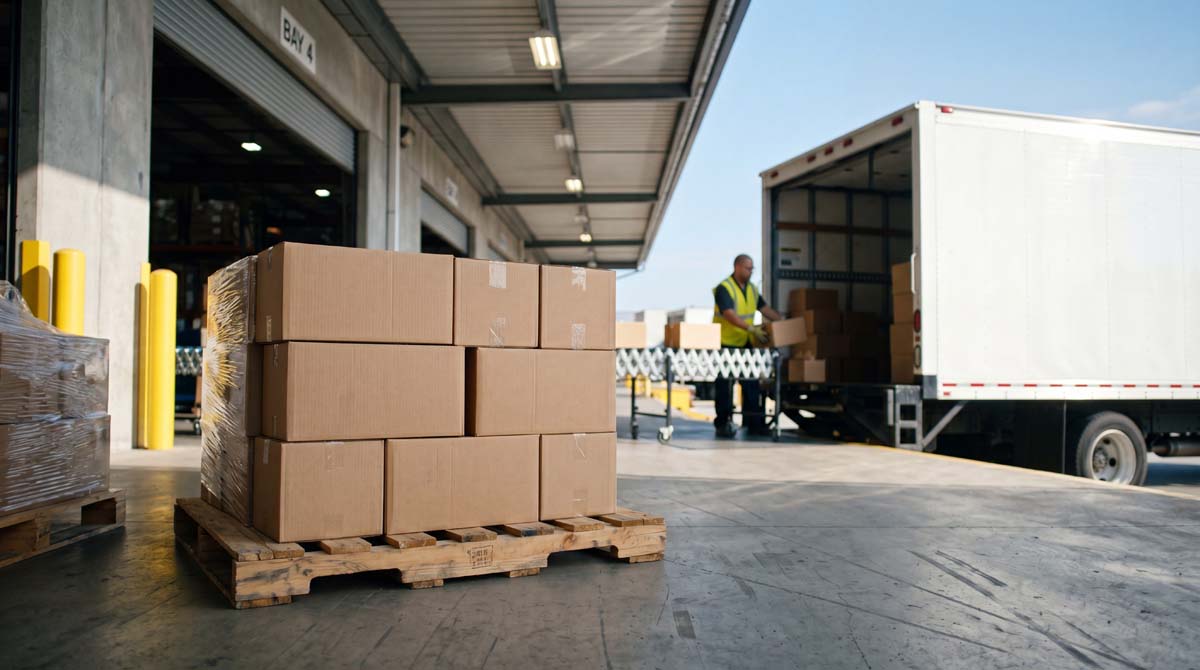
Almost every small brand in this city starts in the same place. A basement in Scarborough, a spare bedroom in Leslieville, a corner of a parent's garage in Brampton. The product is good, the first customers are friends, and the whole operation fits in a hatchback.
Then something works. A shop on Roncesvalles wants to carry it. A booth at the One of a Kind Show goes well. A post finds an audience and the orders keep coming after the weekend. And suddenly the founder is standing in a hallway stacked with boxes, doing mental arithmetic about whether the dining table can hold one more case.
That moment, when a business outgrows the space it started in but is nowhere near ready for a warehouse of its own, is where a lot of promising Toronto companies stall. It does not have to be where they stall.
The Storage Problem Nobody Warns You About
Small business advice covers branding, financing, and finding customers. It rarely covers where the product goes.
The gap is real and it is awkward. Self-storage units are cheap and easy, but you cannot receive a pallet at one, there is no loading dock, and moving inventory in and out means a lot of trips with a hand truck. A small industrial unit solves that but comes with a multi-year lease, a security deposit, insurance, utilities, and a fixed monthly cost that arrives whether you sold anything or not.
For a business with real but uneven volume, both options are wrong in different directions. One is too small to operate from. The other locks up capital that the business needs for inventory, staff, and everything else that actually grows revenue.
The middle path is renting space by the pallet rather than by the square foot, in a facility that already has the docks, the forklifts, the racking, and the people. That is the basic proposition of shared warehousing services, and for a lot of GTA businesses it is the difference between growing and stalling.
Shared Infrastructure Is the Point
There is a version of this city that most people never see, and it runs through the industrial corridors along the 401, the 407, and Highway 50.
The Ontario Food Terminal in Etobicoke is the visible example. It exists because a lot of small produce businesses that could never build their own distribution infrastructure can collectively support something none of them could fund alone. Every one of them gets access to scale they have not paid for individually.
Distribution warehousing works on the same logic. A single small brand cannot justify a dock leveller, a WMS, a forklift fleet, a security system, or a team that knows how to load a trailer properly. Two hundred small brands sharing a building can justify all of it, and each of them gets to use it at a cost proportional to how much they actually need.
What that unlocks tends to surprise people. A business operating out of a garage cannot accept a purchase order from a regional grocery chain, because the chain wants palletised deliveries on a booked dock appointment with the right paperwork. A business with warehouse support can. The product did not change. The infrastructure behind it did.
Presentation Changes What a Small Brand Can Win
Retail buyers in this city are not only judging the product. They are judging whether the supplier can execute.
A hand-labelled carton and an approximate delivery date signal risk to a buyer, however good the contents are. Clean labelling, correct barcodes, retail-ready packaging, and consistent case counts signal a supplier who will not create problems. The gap between those two impressions is often just access to the right equipment.
This is the part of the business small founders usually do by hand, late at night, and it is also the part that scales worst. Shrink wrapping a hundred multipacks is a long evening. Ten thousand is not something a person does at a kitchen table. Having co-packing available means a small brand can take on a bundling program, a seasonal gift set, or a retailer-specific pack format without buying equipment or hiring for a task that only appears a few times a year.
Toronto's craft food and beverage community has leaned into this hard. Producers who could never build their own packaging line have used shared capacity to get into shops across the GTA, and the customer buying a variety pack at a shop on the Danforth has no idea it was assembled in an industrial park in Mississauga.
Seasonal Peaks Are Brutal When You Are Small
For a lot of local businesses, the year is decided between the Distillery District Winter Village opening and the end of December.
A brand doing six months of revenue in six weeks faces a problem that a larger company does not. It must hold enough inventory to meet the peak, ship it fast enough to keep customers happy, and then survive the empty months afterwards without having overcommitted to fixed costs. Getting that balance wrong in either direction is how good businesses fail in a good year.
Flexible space is the practical answer. Taking more pallet positions in October and giving them back in February keeps the cost proportional to the season. Access to a fulfillment operation that can absorb a volume spike means a founder is not personally packing orders until two in the morning during the busiest weeks of their year, which is both a business argument and a human one.
The same flexibility works for a business testing something new. Launching a product line, trying a wholesale channel, or running a pop-up somewhere in the city all become lower-risk when the logistics side scales up for the experiment and back down afterwards. Straightforward e-commerce fulfillment support turns a big commitment into a manageable one.
Growth Should Not Mean Leaving the Neighbourhood
The best thing about the GTA's distribution infrastructure is that it lets businesses grow without moving away from what made them work.
A brand can stay rooted in its community, keep its team and its identity local, and still ship across the country. The founder can spend their time on product and customers instead of on forklift maintenance. And the business can take the opportunity that shows up unexpectedly, because the capacity to handle it is already there.
18 Wheels Warehousing and Trucking has been supporting Canadian businesses since 1989, and our Mississauga and Brampton facilities give GTA companies of every size access to more than 350,000 square feet of space, 76 loading docks, co-packing, fulfillment, and a national network to grow into.
We work with brands that ship a few pallets a month and brands that ship a few hundred a day. If you are somewhere in between and figuring out the next step, we are happy to talk it through.