


2026
Why More Canadian Businesses Are Consolidating Transportation and Warehousing Services
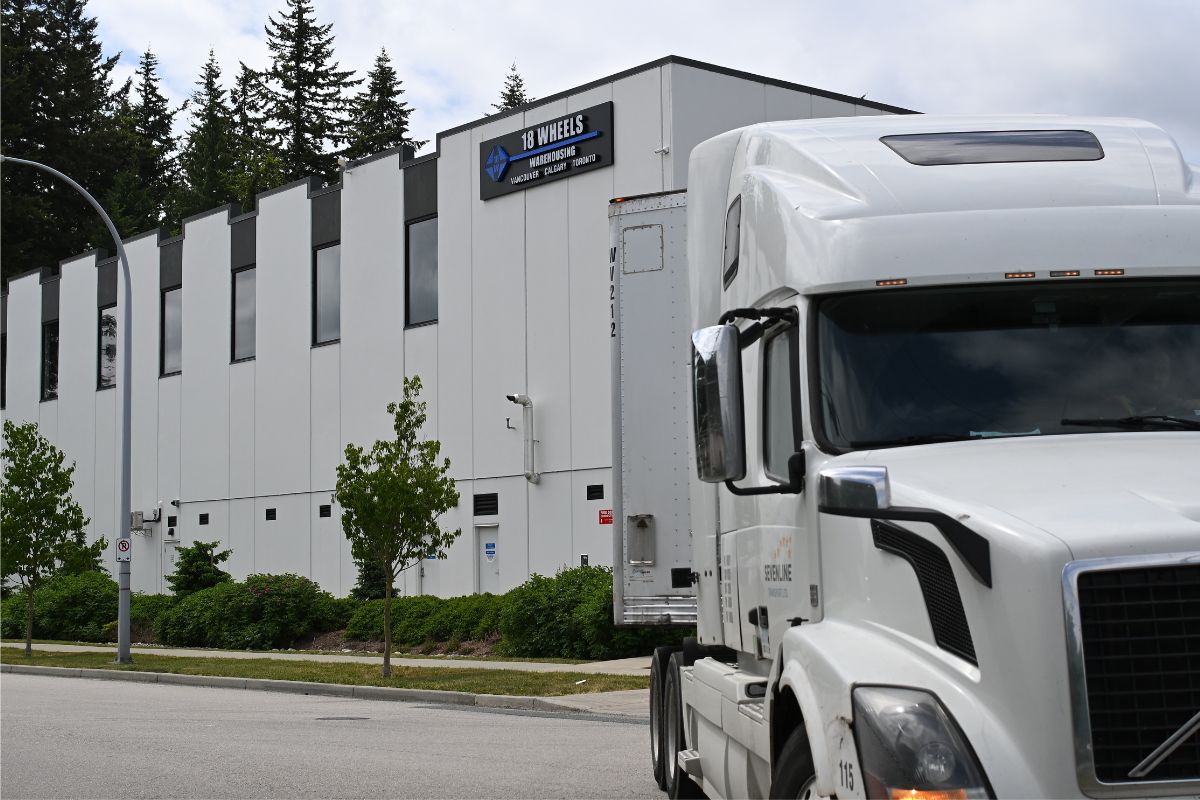
Canadian businesses are consolidating transportation and warehousing under a single provider because the handoff between two separate vendors is where cost, delay, and accountability quietly disappear. When one company stores the goods and another moves them, the seam between them becomes the shipper's problem to manage, and managing that seam consumes far more internal time than most companies account for.
The logic is straightforward once you have lived through the alternative. A pallet that misses its truck belongs to whoever you can convince it belongs to. The warehouse says the carrier arrived late. The carrier says the freight was not ready. Both may be telling the truth. Meanwhile your customer is waiting and someone on your team spends an afternoon reconstructing a timeline instead of doing their actual job.
The costs hiding in the seam
- Detention and dwell. When the warehouse does not control the truck schedule and the carrier does not control the loading, arrivals cluster badly and trailers wait. Detention charges appear on invoices weeks later with no connection to the operational decision that caused them. An integrated provider schedules its own inbound and outbound activity against its own labour, which removes most of this by design.
- Duplicated handling. Separate vendors optimize separately. Freight gets staged, restaged, and sometimes reloaded because the warehouse builds pallets for storage efficiency while the carrier needs them built for trailer efficiency. Under one roof, the outbound plan drives the pallet build, and the touch disappears.
- Missed consolidation. This is the largest and least visible cost. A warehouse that also controls freight can hold two LTL shipments heading the same direction and combine them, or build a multi-stop truckload from orders that would otherwise ship as five separate LTL moves. A warehouse with no visibility into freight cannot see the opportunity, so it never happens. Over a year, that adds up to a meaningful percentage of total freight spend.
- Data fragmentation. Inventory lives in one system, shipments in another, and nothing reconciles automatically. Answering a simple question (where is this order and when will it arrive) requires two logins and a phone call. Your reporting becomes manual, which means it becomes infrequent, which means you stop measuring things that matter.
- Management overhead. Two contracts, two invoicing cycles, two performance reviews, two relationships to maintain, and one person internally who becomes the human integration layer between them. That role rarely appears in any budget and consistently costs more than the finance team believes.
What integration actually enables
Combining the functions unlocks a set of operating models that simply cannot exist across two vendors.
Cross-docking and flow-through move inbound freight directly to outbound doors without ever entering storage. This requires the same operator to see both sides of the flow in real time. Executed properly, it removes putaway and picking labour entirely on qualifying volume and gets product to customers a day or two faster.
Drop trailer programs let the provider load trailers on its own schedule and release them when full or when the cutoff arrives, rather than compressing all loading into the window a third-party driver is willing to wait. Labour spreads evenly across the shift instead of spiking at the end.
Dynamic mode selection becomes real when one party sees inventory position and freight cost together. The decision to ship LTL today or hold for a consolidated truckload tomorrow requires knowing both the customer commitment and the freight economics. Split those across two vendors and the decision defaults to whatever is easiest.
Single-point accountability is the one every operations leader mentions first. When something goes wrong, one company owns it. That changes the conversation from investigation to resolution, and it changes the incentive structure, because a provider who carries both functions cannot blame the other half of the process.
The Ontario context
The GTA sharpens all of this. Warehouse space across Peel, Halton, York, and the surrounding corridors has been tight for years, and industrial land near the 400-series highways carries a premium. Congestion on the 401 and 400 corridors makes departure timing consequential in a way it is not in less dense markets. A truck that leaves at 2:00 p.m. and one that leaves at 4:00 p.m. can arrive hours apart.
Cross-border volume adds another layer. Ontario shippers moving freight to the U.S. deal with electronic manifest requirements, customs documentation, and border wait variability. A provider who handles both the warehouse and the freight coordinates the paperwork against the actual load rather than passing documents between parties and hoping the versions match.
Where consolidation genuinely carries risk
Be clear-eyed about the tradeoffs, because they are real.
Concentration risk increases. One provider handling storage and freight means one point of failure. A labour disruption, a systems outage, or a business failure affects everything at once. Mitigate this deliberately: understand your provider's contingency arrangements, keep your inventory data exportable and in your possession, and negotiate transition assistance into the contract before you need it.
Switching costs increase too. Moving an integrated relationship is harder than replacing one vendor, which shifts negotiating leverage toward the provider over time. Contract term, rate review mechanisms, and clear performance standards matter more in an integrated agreement than in a simple storage arrangement.
And integration does not automatically mean best-in-class on both sides. Some providers are strong warehouse operators with mediocre freight capability, or the reverse. Evaluate each function on its own merits rather than accepting the bundle on faith.
How to structure it well
Define service levels for the combined outcome, not the components. On-time delivery to the end customer is the metric that matters. Warehouse dispatch accuracy and carrier on-time performance are diagnostic sub-measures, not the goal.
Insist on a single reporting view covering inventory, orders, and shipments. Review performance monthly against agreed measures. And build the relationship as a partnership with open cost visibility, because the consolidation opportunities that save the most money require the provider to make decisions on your behalf, and they will only do that well if the incentives line up.
We deliver integrated warehousing and transportation from the GTA, including cross-docking, LTL and truckload freight, and distribution across Ontario and beyond. If you are currently splitting these functions across separate vendors, talk to our team. A review of twelve months of freight invoices against your order data usually shows the consolidation opportunity within a day.